
What can oral history reveal about fairground life that conventional archives cannot? In conversation with three retired showwomen, historian Véronique Faber and filmmaker Alexandra Rice recorded memories of work, family life and skills learned through practice. Together with Nele Wynants, they reflect on what happens when women remember their working lives collectively – and on how oral history can preserve traces of a mobile and performative culture that might otherwise be lost.
“À notre époque, ça se faisait moins” – In our day, that wasn’t done as much, one woman said. Another shook her head. No, she remembers it differently. A third jumped in to explain. Three retired showwomen around a table in a private apartment in Ostend were trying to remember when their children were picked up from boarding school to join their parents at the fairground.
“I never used to pick up my kids on Wednesday because I was too busy”, one recalled. “You used to pick up your kids on Wednesday? In our day, that was done less”, another responded. “We were even angry at the mothers who did.” “Because we thought our kids would be jealous”, the third added.
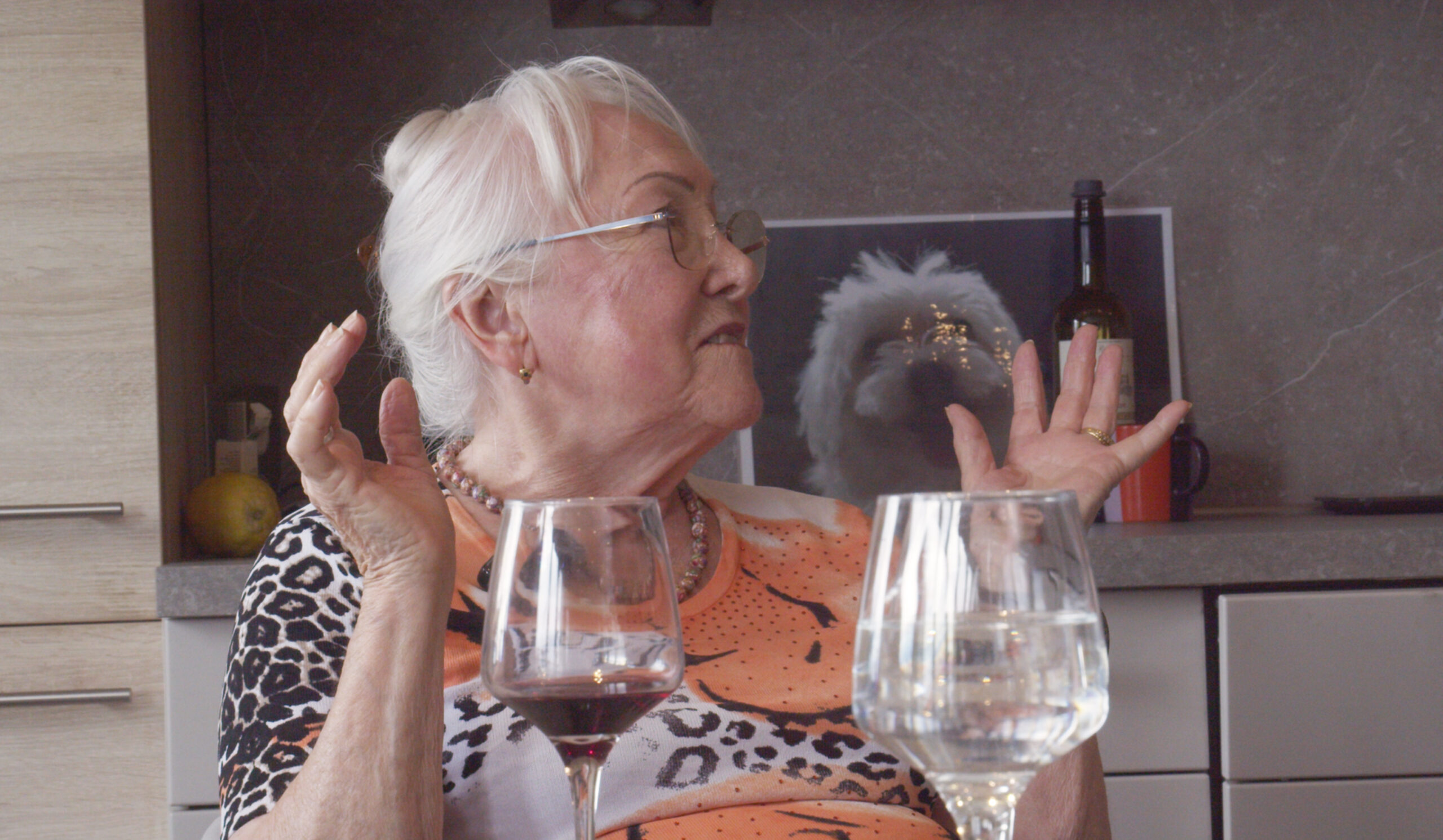
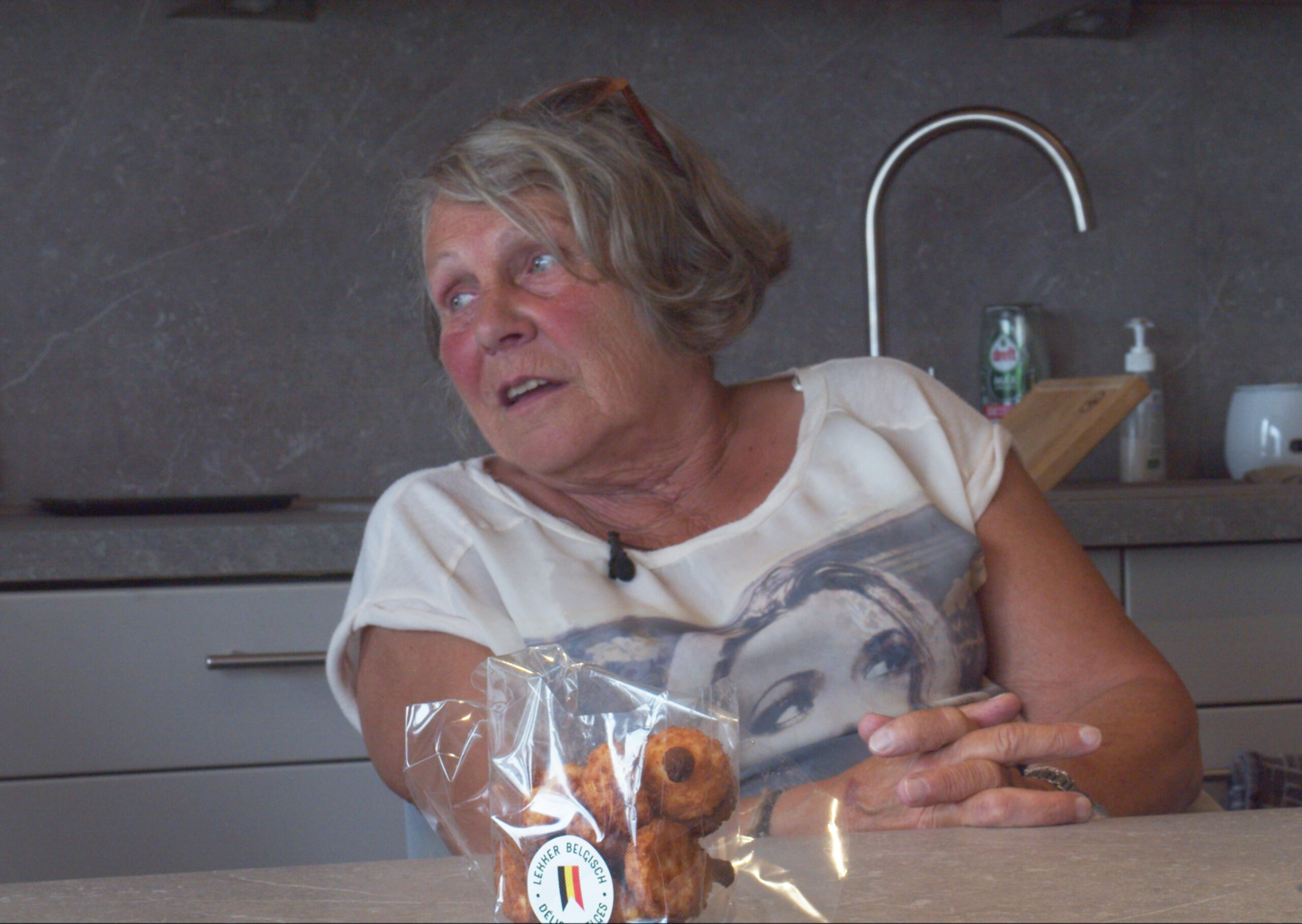
This is remembering in action. The women did not simply recount three individual life stories; they reflected on their own childhood and discussed their grandchildren’s situation today. This back-and-forth between timelines characterized the interview recorded that day. They remembered together, in real time, without anyone delivering a monologue. They agreed, contradicted one another, and laughed, completed each other’s thoughts, and moved constantly between their own childhoods, their years as working mothers, and the lives of their children and grandchildren today.
Historian Véronique Faber and filmmaker Alexandra Rice had come to Ostend to record the experiences of women whose working lives on the fairground have left relatively few traces in conventional archives. What emerged over more than three hours was also a lesson in oral-history method. The conversation demonstrated that memory is relational and reveals itself through dialogue and comparisons between narrators and across time.
This blog reflects on that encounter: on how the group conversation changed the questions we thought we wanted to ask, and what it means to record such an exchange for future research.
From archive to interview
Earlier historical work on women at the fairground has relied on archival sources, such as periodicals, membership lists, and correspondence, to reconstruct the roles women held at nineteenth-century funfairs (Andersen and Wynants, 2024). Archival sources such as those collected by the Science at the Fair public database allow us to reconstruct where women worked, what responsibilities they assumed, and how fairground businesses were organised. Oral history asks a different question: how do women themselves remember that work, and what becomes visible when they remember it together? Oral history lets us capture experience and go beyond reconstructing or extracting historical facts.
Françoise Lamontagne, Marie-Louise Van Vugt, and Marie-France Turu worked together at the fairground and, in retirement, are friends living near each other on the Belgian coast. Alexandra befriended Françoise while working on her film Quartier Nomade (2018), which was based on ten years of conversations between Rice and several Belgian showpeople. Alexandra had already met Françoise’s other friends on several occasions before this interview. This familiarity led to a cheerful, open meeting that ultimately lasted more than three hours, with lunch prepared by its host Françoise.
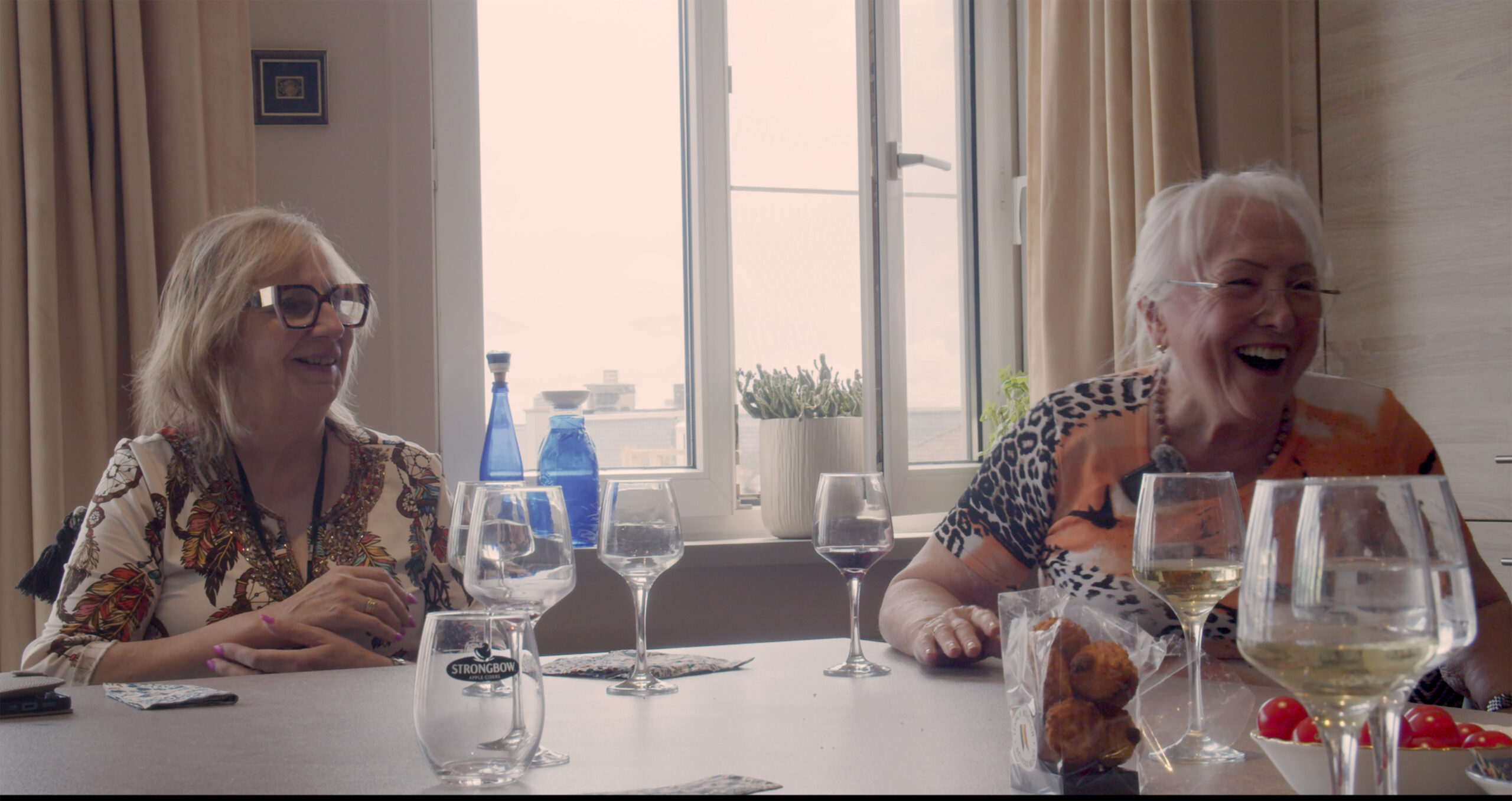
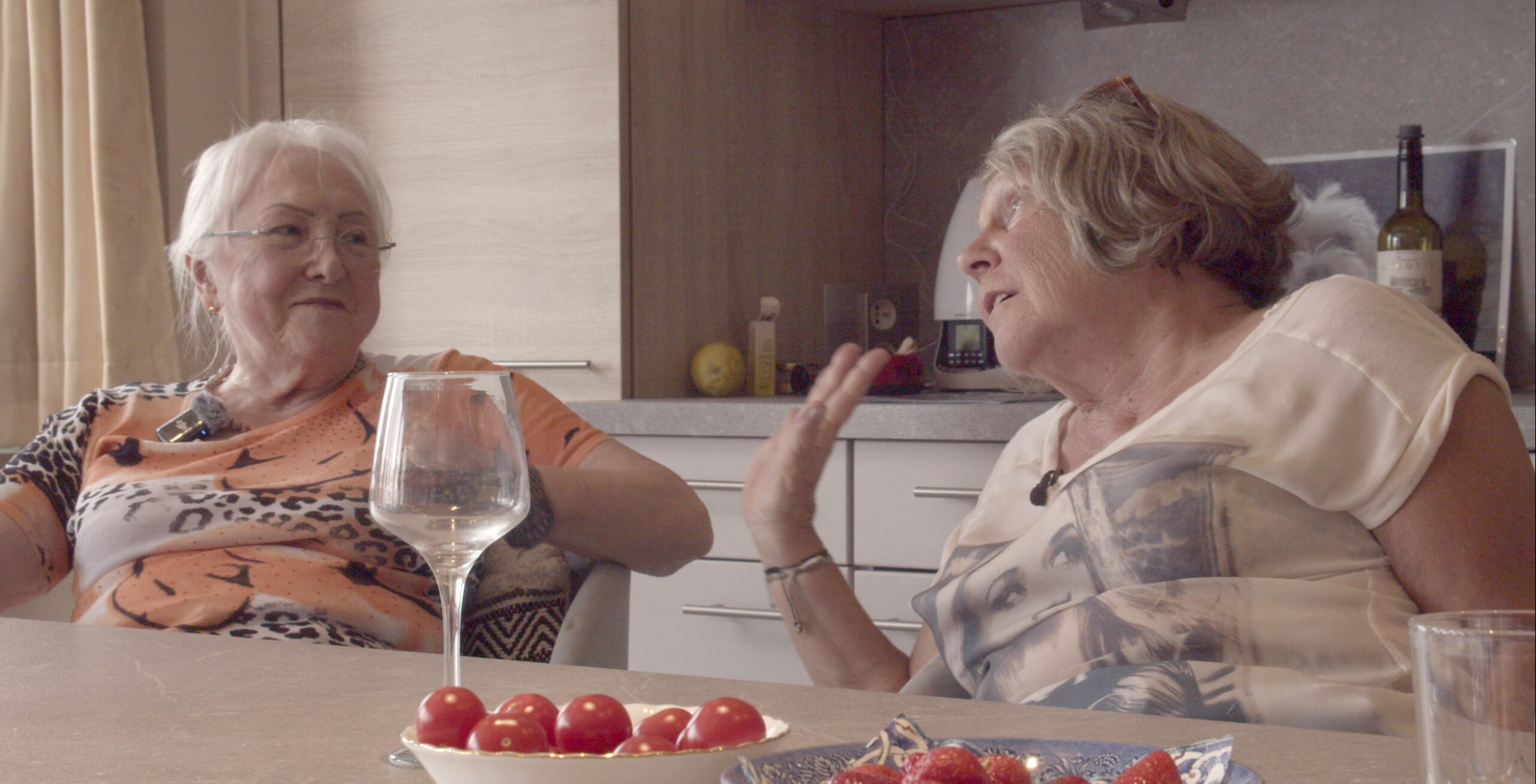
Although Véronique met the three women for the first time at the time of the conversation, they welcomed her immediately. The interview proceeded in two stages: the women were first filmed individually to capture uninterrupted biographical accounts, then brought together to discuss women’s broader role at the fairground and the learning and transmission of skills. These themes proved too abstract to prompt discussion on their own. However, when asked what they wanted to talk about, their answer was immediate and unanimous: children, education, and childcare.
What initially sounded like a conversation about childcare gradually became a conversation about work. Although the interviewees named childcare as a key focus of their conversation, it became increasingly clear throughout the discussion that this was only part of what running a fairground business as a woman involves. In French, “tenir un métier” can mean almost everything: handling customers, keeping the books, minding children, cleaning, cooking, and fixing whatever breaks because there is no one else to call. Running a (successful) fairground business requires attracting customers, speaking several languages and having many skills, and knowing your customers well.
When asked how they learned to run a fairground business, no straightforward answer came, as tacit knowledge – what we know and what we cannot easily explain – does not register as learned or acquired. It is simply part of daily life: working with a mother-in-law, learning by doing, promoting the business. Situated learning is a process in which beginners gradually take on complex roles by observing and participating in fairground activities and practices. It is implicit, embodied, and passed on from generation to generation. It was never written down because it never needed to be.
Collective remembering
Oral history is a dialogue in which the interviewee and interviewer shape what is remembered and how it is told, as Italian oral historian Alessandro Portelli pointed out in his foundational The Death of Luigi Trastulli (1991). In this case, the interviewees took a large part of the conversation into their own hands by responding or choosing not to respond to questions, or by reframing them, and in turn drawing the interviewer further into the conversation. The power dynamic between interviewer and interviewees never fully disappeared, of course, but the format gave the women more agency than a conventional one-on-one interview might have.
The interview shows that the narrators engage not only with the interviewer but also with each other. The interviewer then interprets these narrations. They weren’t just filling the gaps; they were steering where the memory went. This meant the narrators also became interpreters of each other’s experiences, prompting one another, completing each other’s sentences, and continuing the thought chain in new directions.
The Ostend conversation was therefore not simply a complement to the archives, but a source in its own right. What three women agreed on, laughed about, and completed each other’s sentences over mattered enough to be told and retold. What they contested was just as revealing about their shared experience. The discussion about picking up children from boarding school showed that separating from their children followed a shared, socially enforced norm: the separation was accepted as a condition of fairground life, mothers who broke the rule were criticised, and the rule was justified as fairness to the other children. As conceptualised in Sources and Methods for the History of Experience by historians Ville Kivimäki, Antti Malinen, and Ville Vuolanto (2026), a “community of experience” is fundamentally driven by people arguing over and negotiating the meaning of what they went through. Their shared circumstances shaped their experience – such as having to separate from children for the sake of schooling – but the way that separation was lived and addressed could differ.
Group conversations come with a risk. When several people remember together, they tend to drift toward agreement, and one strong voice can end up setting the agenda. Here, the women’s long-standing friendship partly counteracted this tendency. They corrected and completed each other constantly: “No, that was later”, “You’ve forgotten…”, “That was your father”. Each correction sharpened the story, and settled it, with every new version being challenged and then confirmed.
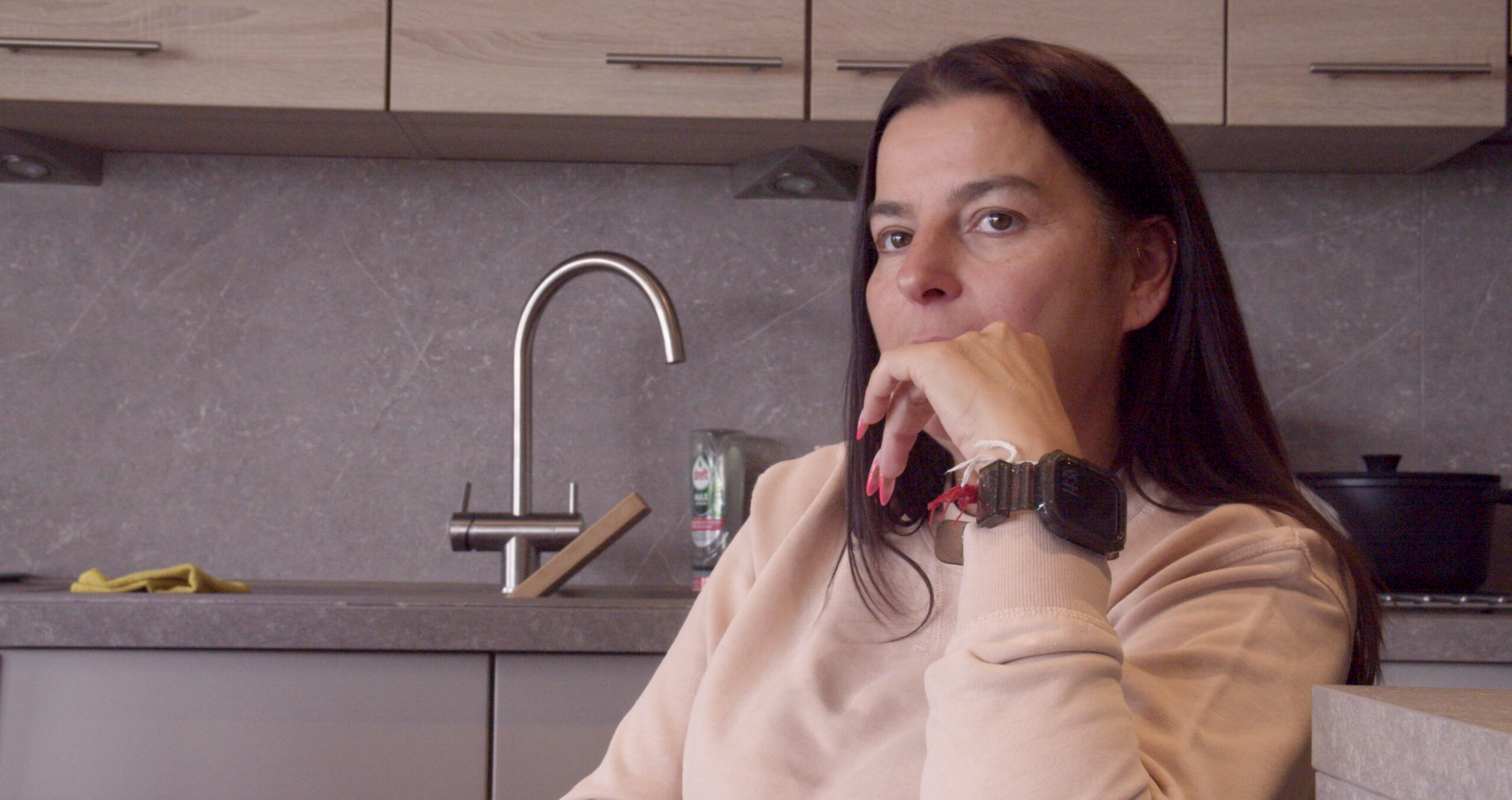
When one of the women’s daughter appeared, the conversation changed. Until then, they had articulated projections of the present and future as a shared horizon (Reinhart Koselleck), anchored in memories of the past. With the daughter present, the talk returned to running a fairground business, now in its present-day form: how younger showpeople use social media to attract customers and create a buzz. She showed the reels her own daughter made. The future was no longer an abstract shared horizon but carried more weight than memories.
Recording Interaction
If remembering was a collective process, how could we document that interaction? We decided to film the interview because a transcript captures words but easily loses the gestures, glances, interruptions, and laughter through which the conversation unfolded. In a group setting, a single microphone or camera risked flattening the dynamic we wanted to preserve.
The conditions were far from ideal: conversation went back and forth, speakers moved around the room, the location was not ideal for filming, and Alexandra worked alone for the recording as Véronique was focused on the interview. The footage therefore does not follow the conversation continuously, but the separately recorded audio allowed Alexandra to reconstruct the sequence.
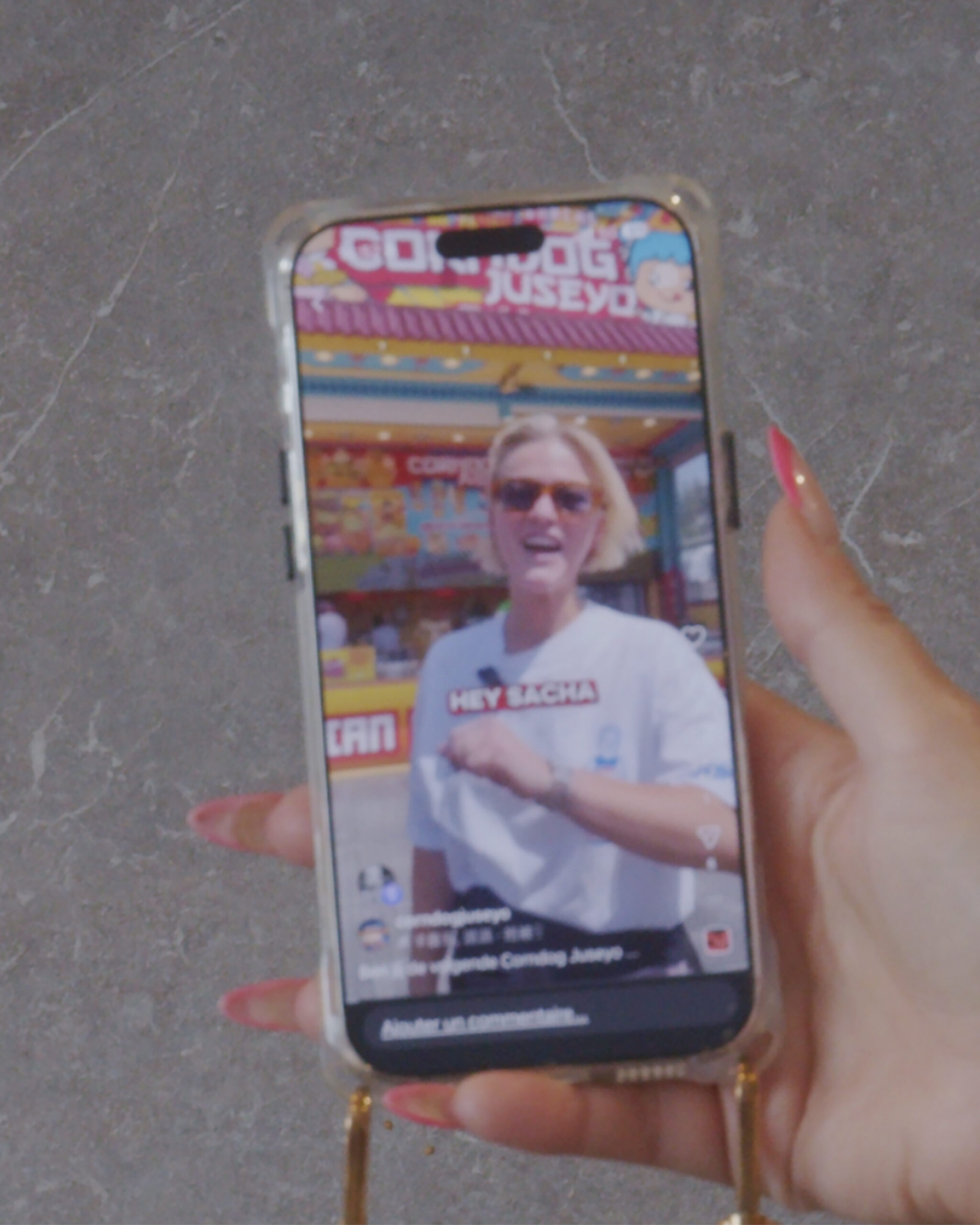
The setting was worth the trade-off. Filmed in a familiar home, the women quickly forgot the camera. Their bodies relaxed and their gestures complemented one another as naturally as their words did, which is rarely the case in a static one-on-one interview, where speakers often stay guarded and keep the camera at the centre of the exchange. The result is not only an oral record but a visual archive of living memory.
Outlook
The Ostend group interview shows what oral history can do in a group setting. When the women talk together, they prompt, correct, and build on one another’s memories. What emerges is not only a set of individual recollections but a conversation about how things were done and what they meant for them. A group interview also captures the dynamics between the women themselves: the friendship, the agreements as well as the disagreements.
What the interview teaches us about fairground work is that it was learned bodily, socially, and informally, often across generations and frequently through women. This is also what we risk losing when the people who lived that culture are no longer there to tell us about it.
Oral history can save some of it. With audiovisual recording, we also keep the voices, the gestures, the facial expressions and the back-and-forth between the women, things that rarely make it into a conventional archive. Documenting fairground history is therefore not just a matter of recovering what happened. It is also about safeguarding a living culture: how it was lived, learned, and passed on; and how people themselves keep it alive today.
Disclaimer
AI-based tools were used to assist with transcription and translation (Transcribe and Claude Anthropic). The authors reviewed the resulting text and remain fully responsible for the content and analysis.